
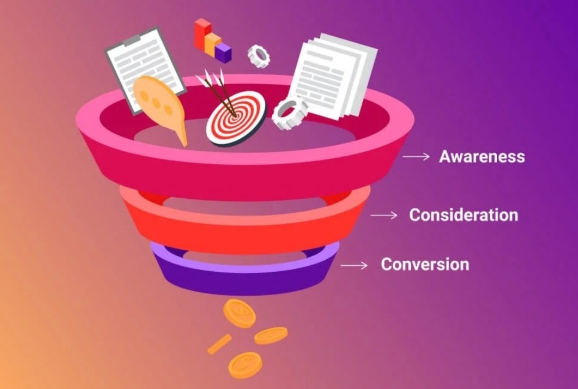
A marketing funnel is a structured process that guides potential customers through different stages of the buying journey. From discovering a brand to becoming a loyal customer, each stage requires a different marketing approach. A well-designed funnel helps businesses attract the right audience, nurture leads, and increase sales.
The first stage is awareness, where potential customers discover a business, product, or service. Businesses can generate awareness through search engine optimization, social media marketing, online advertising, blog content, videos, and other digital marketing channels. The goal is to reach the target audience and create initial interest.
The next stage is interest. At this point, potential customers want to learn more about the business and its offerings. Providing informative blog posts, guides, videos, webinars, case studies, and educational content can help answer their questions and demonstrate expertise.
The consideration stage is where prospects compare different solutions before making a decision. Businesses should highlight their unique value proposition, product benefits, customer reviews, testimonials, case studies, and competitive advantages. Providing clear and useful information helps prospects feel more confident about choosing the business.
The conversion stage focuses on turning prospects into customers. Strong calls-to-action, simple forms, attractive offers, free trials, demonstrations, and easy checkout processes can encourage users to take the desired action. Reducing unnecessary steps in the purchasing process can also improve conversion rates.
After a customer makes a purchase, the funnel continues with retention. Businesses should maintain relationships through personalized emails, helpful content, customer support, loyalty programs, and exclusive offers. Providing excellent customer experiences encourages repeat purchases and long-term loyalty.
The final stage is advocacy, where satisfied customers recommend the business to others. Reviews, referrals, testimonials, and social media recommendations can help generate new leads and strengthen brand credibility.
Understanding the target audience is essential when building a marketing funnel. Businesses should identify customer needs, pain points, interests, purchasing behavior, and common objections. This information helps marketers create relevant content for every stage of the customer journey.
Marketing automation can make funnel management more efficient. Email campaigns, lead scoring, customer relationship management (CRM) systems, and automated follow-ups allow businesses to nurture prospects without relying entirely on manual processes.
Analytics and tracking are also important. Businesses should monitor metrics such as website traffic, lead generation, conversion rates, customer acquisition costs, and sales. These insights help identify weak points in the funnel and provide opportunities for optimization.
A successful marketing funnel should be continuously tested and improved. A/B testing different headlines, landing pages, offers, email messages, and calls-to-action can help determine which strategies produce the best results.
In conclusion, a winning marketing funnel combines effective audience targeting, valuable content, strong calls-to-action, consistent follow-up, and continuous optimization. By guiding customers through each stage of their journey, businesses can generate more qualified leads, increase conversions, and build lasting customer relationships.






Share This News